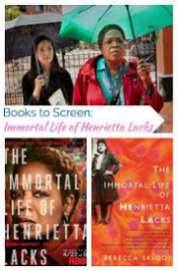
Her name was Henrietta Lax, but scientists know her as Hela. She was a poor tobacco grower from the South who worked on the same land as her slave parents, but her cells, seized without her knowledge, became one of the most important medical instruments. The first immortal human cells grown in culture, they are still alive today, although they were dead for more than sixty years. If you could add up all the scale-sized HeLa cells, they would weigh more than 50 million tons as much as a hundred Empire State buildings. HeLa cells were important in the development of the polio vaccine; discovered the secrets of cancer, viruses and the effects of nuclear bombs; contributed to important advances such as in vitro fertilization, cloning and genetic mapping; Bought and sold by Henrietta Lax remains virtually unknown, buried in the unmarked Rebecca Skloot takes us on an extraordinary journey, from the colorful room of Johns Hopkins Hospital in the 1950s to the bright white laboratories with freezers filled with HeLa cells; Henrietta, a dying town in Cleverney, Virginia, today in the area of ??wooden slaves, religious healings and voodoo in East Baltimore, where her children and grandchildren live and struggle with surviving relatives, heard of his immortality more than 20 years after his death. death, when researchers who studied Hal began using men and children in research without informed consent. And although the cells have launched a multimillion-dollar industry that sells human biological material, his family has never seen a profit. https://1kck.ru/novosti-kompanii/the-immortal-life-of-henrietta-lacks-by-rebecca-skloot-free-pdf-e-book/
As Rebecca Skloot, the history of the Lacquer family, so vividly demonstrates, past and present, is clearly linked to the grim history of African-American experiments, the birth of bioethics, and the legal struggles over whether we control what we do over the decades. To learn about this story, Rebecca became entangled in the lives of the Lac family, especially Deborah, Henrietta’s daughter, who was devastated.learn in the mother’s cells. She was asked: did scientists clone her mother? Didn’t it hurt her when researchers infected her cells with viruses and threw them into space? What happened to his sister Elsie, who died in a psychiatric institution at the age of fifteen? And if her mother was so important to medicine, why couldn’t her child get health insurance? Intimate in its emotions, amazing radiance and impossible to suppress, the immortal life of Henrietta Luck captures the beauty and drama of scientific discoveries and its human consequences..